
HISTORY
ABORTION
The New Testament Reaffirms and Elaborates the Sanctity of Life, Opposing Abortion (44-94 AD)
The Christian Bible is divided into two sections: The Hebrew Bible, known as the “Old Testament” (old covenant) and the New Testament (new covenant). Composed of 4 Gospels (Matthew, Mark, Luke, John), the Acts of the Apostles, and 22 different letters from Paul, Peter, John, and others, it’s a collection of 27 books in total. Conservative scholars date the earliest of these books from around 44AD to as late as about 94AD. ( 1 )

While there is a complex relationship between the Old and New Testaments, the underlying ethical guidelines known as “natural law” and many of the “laws of Moses” are reaffirmed in the New Testament including laws against murder, adultery, lying, stealing, and even dishonoring one’s parents (Exodus 20:1-17 cf., Mark 10:19). The New Testament, while very different in tone and scope, nevertheless complements and clarifies the Old Testament message. The main character, Jesus, for example says, “Do not think that I have come to abolish the Law or the Prophets [meaning the Hebrew Bible], I have not come to abolish them but to fulfill them” (Matthew 5:17). His ministry and message is completing, not contradicting, the moral, social, and spiritual standards established in the Old Testament. While the Old Testament made God’s laws clear (Deut. 29:29), the New Testaments clarifies how no one can live up to that law, everyone falls short, everyone needs forgiveness, everyone needs grace (Romans 3:10; 5:8; 10:9; John 3:16).

When it comes to abortion, the Old Testament message is that children are a gift of God, parenthood is a special kind of blessing, we should protect innocent life, and there is no clear permission for elective abortion, much less abortion-choice policy in the Old or New Testament (Exodus 20:13; 21:22-23 [NASB]; Deuteronomy 19:21; Proverbs 6:16-19; Psalms 127:3-5; et al.). Additionally, we find in the New Covenant era, sweeping self-sacrificing principles like “Love your neighbor as yourself” (Mark 12:31), “Do unto others as you would have them do unto you” (Luke 6:31). We also find peace-seeking practices like “turn the other cheek” (Matthew 5:39), “go the extra mile” (Matthew 5:41), and “as far as you are able live at peace with everyone” (Romans 12:18). Additionally, all human beings are made in “God’s image” (James 3:9; c.f., Gen. 1:26-28). It would be hard to cram an abortion-choice outlook into these principles without doing great injustice to the life-affirming, peace-seeking, and self-sacrificing standards Jesus modeled to his followers.
The Risen Christ (sculpture), by Michaelangelo (1521), housed in St. Maria Sopra, Rome; Public Domain; image source: https://www.michelangelo.org/risen-christ.jsp
The Didache forbids abortion (70-130 AD)
Written sometime between 70-130AD, the Didache (Gk., “Teaching”) is a Jewish-Christian instruction manual on early church life. It may have been written in Syria, Egypt, or Asia Minor (Turkey), but its Jewish-Christian themes suggest Israel is a strong candidate. The Didache outlines basic rules for church conduct, and Christian living. Its second commandment says,

You shall not murder. You shall not commit adultery. You shall not seduce boys. You shall not commit fornication. You shall not steal. You shall not practice magic. You shall not use potions. You shall not procure [an] abortion, nor destroy a newborn child.
(Didache 2:1–2 [A.D. 70-130]) ( 2 )
Tertullian Affirms Conception Definition of Life and Denounces Abortion as Murder (197-240 AD)
The early church father Tertullian (160-240AD) is unambiguously pro-life whenever he speaks on the issue of abortion. He also offers some insights into the early church’s view on abortion and abortion ethics. Notably, the church was already affirming a conception definition of life as early as the 2nd century.
In our case, a murder being once for all forbidden, we may not destroy even the fetus in the womb, while as yet the human being derives blood from the other parts of the body for its sustenance. To hinder a birth is merely a speedier man-killing; nor does it matter whether you take away a life that is born, or destroy one that is coming to birth. That is a man which is going to be one; you have the fruit already in its seed.
(Apology 9:8 [A.D. 197]) ( 3 )
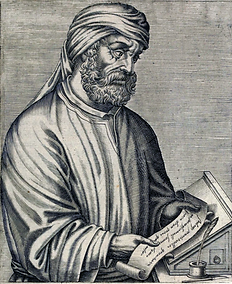
Portrait of Tertullian.
André Thevet, Public domain, via Wikimedia Commons
Brothers Basil the Great and Gregory of Nyssa Affirm Human Life Begins at Conception but Teach Abortion is a Forgivable Sin (374 AD)

José Luiz, CC BY-SA 3.0 <https://creativecommons.org/licenses/by-sa/3.0>, via Wikimedia Commons

Public domain, via Wikimedia Commons
José Luiz, CC BY-SA 3.0 <https://creativecommons.org/licenses/by-sa/3.0>, via Wikimedia Commons
Basil of Caesarea (330-379AD), also known as St. Basil the Great, was Bishop of Caesarea in Asia Minor (Modern day Turkey). Along with his brother Gregory of Nyssa (335-395AD), Basil affirmed the Nicene Creed, helped to clarify trinitarian doctrine, and combatted the Arian heresy. In his writings, he treated abortion as a forgivable sin, but a sin nonetheless.
Let her that procures abortion undergo ten years’ penance, whether the embryo were perfectly formed, or not.
(First Canonical Letter, canon 2 [A.D. 374]) ( 5 )
[T]he man, or woman, is a murderer that gives a philtrum, if the man that takes it dies upon it; so are they who take medicines to procure abortion; and so are they who kill on the highway, and rapparees.
(ibid., canon 8) ( 5 )
To Basil, it did not matter whether the abortion took place before the quickening, or even if the child was expected to be deformed, the abortion was still penance-worthy. Additionally, he recognizes ingestible abortion medications, and faults both parties - the one who administers it and the one who receives it.
St. Gregory of Nyssa (335-395AD) was the Bishop of Cappadocia (in modern Central-Eastern Turkey) and is considered one of the Eastern fathers of the Church. On the subject of abortion, he rejects it on the grounds of the conception definition of life.
There is no question about that which is bred in the uterus, both growing and moving from place to place. It remains, therefore that we must think that the point of commencement of existence is one and the same for body and soul.
(On the Soul and the Resurrection, in Philip Schaff, Nicene and Post-Nicene Fathers, Series II, vol. 5, pg. 458) ( 6 )
The Apostolic Constitutions Forbids Abortion as Unjust (380 AD)

Calling of the First Apostles, 1481, Fresco by Dominico Ghirlandaio int he Sistine Chapel, The Vatican (Rome). Public Domain. Image source: https://commons.wikimedia.org/wiki/File:Ghirlandaio,_Domenico_-_Calling_of_the_Apostles_-_1481.jpg
Dated around 380AD and possibly written in Syria, the Apostolic Constitutions is an 8-book collection of texts which may have been compiled from the teaching and instructions of the twelve apostles and, at one point, may have carried equal or near equal authority to Scripture regarding moral practice, church order, and liturgy. It was eventually judged to be pseudepigrapha (false-named) and denied any authoritative standing. Among its teachings can be found an explicit prohibition against abortion.
Thou shalt not use magic. Thou shalt not use witchcraft; for he says, ‘You shall not suffer a witch to live’ [Ex. 22:18]. Thou shall not slay thy child by causing abortion, nor kill that which is begotten. . . . [I]f it be slain, [it] shall be avenged, as being unjustly destroyed.
(Apostolic Constitutions 7:3 [A.D. 400]) ( 7 )
St. Jerome Decries the “Daily Fall” of Women with Abortion, as it often Combines Suicide and Child Murder (396 AD)
While the Christian church certainly has a patriarchal tradition, the Christian rise in Rome represents a vast humanitarian development beyond the Old Roman “Patria Potestas” (power of the father). One glaring example of this humanitarian view of women and children is found with St. Jerome (342-420AD). Also known as Jerome of Stridon, from a Roman town in modern day Bosnia. Jerome is most famous for the Latin Vulgate, a translation of the Bible into the “vulgar tongue” (common language) of the people (Latin). He says of abortion:

I cannot bring myself to speak of the many virgins [i.e., maidens] who daily fall and are lost to the bosom of the Church, their mother. . . . Some go so far as to take potions, that they may ensure barrenness, and thus murder human beings almost before their conception. Some, when they find themselves with child through their sin, use drugs to procure abortion, and when, as often happens, they die with their offspring, they enter the lower world laden with the guilt not only of adultery against Christ but also of suicide and child murder.
(Letters 22:13 [A.D. 396]) ( 8 )
Saint Jerome in his Study, by Dominico Gherlandio (1480) in Ognissanti Florence (Italy); Public Domain. Image source: https://commons.wikimedia.org/wiki/File:Domenico_Ghirlandaio_-_St_Jerome_in_his_study.jpg
Penitential Books (500-1000 AD)
While early medieval Christianity did not possess a single unified legal code, its moral opposition to abortion is clearly expressed in the pastoral and penitential sources that guided Christian life across Europe. These texts reveal a consistent concern for sexual morality, repentance, and the sanctity of human life, even amid regional variation.
One of the most enduring influences on early medieval thought was Canon 21 of the Council of Ancyra (c. 314), a ruling that continued to circulate in adapted form for centuries (Council of Ancyra, Canon 21, c. 314). The canon condemns women who “commit fornication and kill their newborns, and also those who act so that what has been conceived in the womb is expelled.” By naming both the killing of a newborn (partus) and the intentional expulsion of what was conceived (conceptus), the text demonstrates an early Christian rejection of actions aimed at ending human life both after and before birth. This canon was repeatedly incorporated into medieval penitential collections, shaping how confessors addressed abortion in pastoral practice (see John T. McNeill and Helena M. Gamer, Medieval Handbooks of Penance, 1938).
Original Latin
De mulieribus quae fornicantur et partus suos necant, sed et de his quae agunt secum ut utero conceptos excutiant… (Council of Ancyra, Canon 21, c. 314) ( 9 )


This moral framework appears even more clearly in Irish and Frankish penitential books, practical manuals written for priests administering confession. Several of these texts speak explicitly of the conceptus—the fetus—and assign penances for women who caused its expulsion, as well as for those who supplied abortifacient substances. ( 10 ) These entries show that early medieval churchmen understood abortion as a deliberate moral offense with spiritual consequences, requiring repentance and correction rather than indifference or approval.
Together, these sources reveal that early medieval Christianity treated abortion as a serious moral violation. Though theological debates about fetal development and ensoulment continued, the surviving penitential evidence reflects a consistent commitment to the protection of nascent human life and to the belief that its intentional destruction required penance and reconciliation.
Lef: Cherubim, Tree of penitence & ladder of twelve virtues; CC BY 4.0 <https://creativecommons.org/licenses/by/4.0>, via Wikimedia Commons
Right: Penitence, as a Knight in armour & the three Graces; CC BY 4.0 <https://creativecommons.org/licenses/by/4.0>, via Wikimedia Commons
Islamic Teaching Says Ensoulment Begins on day 120, Allowing Some Elective Abortions Before then (610 AD)

Dome of the Rock, Jerusalem (orig. 691). Public Domain. Image source: https://en.wikipedia.org/wiki/Dome_of_the_Rock#/media/File:Jerusalem-2013(2)-Temple_Mount-Dome_of_the_Rock_(SE_exposure).jpg
The Prophet Muhammad (570-632AD) had a storied life, establishing Islam as a dominant religion in Saudi Arabia during his lifetime. Shortly thereafter, Islam rose to the status of a world power forever changing the social, political, and religious landscape across the globe, with its strongest presence in the middle east. Among its many and diverse teachings, the Islamic holy book known as The Qur’an describes human gestation in stages (Surah 23 verses 13-15), ( 11 ) with ensoulment happening around 120 days into the pregnancy. This teaching is similar to the view of Aristotle which surged in popularity in the early to high medieval period with scholars like Thomas Aquinas endorsing it. In Islamic thought, abortion is permitted for a host of reasons in the first 40 days, though threat-of-poverty is not considered a valid reason. Between 40 and 120 days, scholars disagree somewhat over what would constitute a “valid” reason for an abortion though all agree on therapeutic abortion (to save the mother’s life) and aborting severely handicapped or severely deformed children-in-utero. After 120 days, Islamic thought converges, believing the child acquires a soul, and thereby opposing abortion-on-demand except for therapeutic abortion. It should be noted that Islam roughly parallels the medieval biology of Augustine, Aquinas and the Scholastics used. They did not think the developing child-in-utero was a “human being” as such until around 120 days into gestation, around the time of the quickening (first detectable movement). ( 12 ) As such, “abortion” before that point was not thought to be killing a human being per se but rather terminating a pre-human organism. This critically important distinction means that Islam, at least in the medieval era, did not allow for abortion-choice per se, but for an extended sense of contraception, where the new human life is not allowed to begin. Additionally, while feminism has been a major influence in Western teaching on abortion, its influence is relatively muted in the middle-eastern Islamic teaching on abortion. Islam generally retains a high view of marriage, family, and children, though it also has a reputation for being more patriarchal and traditional than Judeo-Christian cultures.
Legal Codifications of Abortion (1140-1275 AD)
The theological distinctions made by Aquinas and other medieval thinkers influenced both ecclesiastical and secular law. Before the High Medieval Period, abortion was often condemned in broad terms, but the specifics of punishment varied. By the 12th and 13th centuries, however, abortion became more explicitly criminalized under both canon law and civil codes.
The Church, particularly through the establishment of Gratian's Decretum and later canon law collections, began to address abortion with greater specificity. Gratian’s influential Decretum (circa 1140) categorized abortion as a sin, but it did not explicitly label all abortions as homicide. ( 13 ) In line with Aquinas' ideas, the Decretum distinguished between pre-quickening and post-quickening abortions, reflecting the Aristotelian understanding of delayed ensoulment. Ecclesiastical courts, which had increasing jurisdiction over moral and ethical matters, could excommunicate those involved in abortions, and harsher penalties were applied in cases of post-quickening abortion, sometimes even considering them under the purview of murder.
Secular law, though initially more lenient in many regions, gradually mirrored these Church teachings. By the 13th century, certain European territories had begun to explicitly outlaw abortion at any stage, with post-quickening abortions often treated as a form of homicide. Medieval legal codes such as the Sachsenspiegel (Saxon Mirror) and the Schwabenspiegel (Swabian Mirror) provided secular punishments, including fines or imprisonment for abortion, particularly in cases where the unborn child was perceived as "ensouled." ( 14 ) However, like the Church, many secular laws differentiated between pre-quickening and post-quickening abortion, reserving harsher penalties for the latter.

Tree miniature illustrating the kinds of blood relatives and common ancestry which made marriage impossible and contracted marriages null. (1300-1330 AD)
Tree miniature illustrating the kinds of blood relatives and common ancestry which made marriage impossible and contracted marriages null. (1300-1330 AD)
Thomas Aquinas Pens the Summa Theologica, Affirming the Quickening Definition of Human Life and that Women are Malformed Men (1273 AD)

In the town of Naples, Italy, a benedictine monk by the name of Thomas Aquinas, began writing his magnum opus, the Summa Theologica in 1266. He died in 1273, never finishing his Summary of Theology. Yet this unfinished work remains one of the most substantial and respected texts in systematic theology and Christian philosophy in the world. While Aquinas never defends abortion at any stage, he reflects the science of the times – consistent with Aristotle, St. Augustine, the Quran, and his Christian contemporaries in the Scholastic tradition – by suggesting that distinct human life doesn’t begin until fetal movement begins (i.e., it’s first detectable; that is, the quickening). ( 15 ) In his view, animation was a sign of ensoulment and a new human life is a soul-body composite (which he called “hylomorphism”). He believed that male babies were ensouled at 40 days after conception and females at 80 days after conception. Additionally, he taught that females, in utero, are under-developed or “malformed” males – where the genitalia remains inverted. ( 16 ) For all his other contributions to Christian theology and philosophy, his understanding of human anatomy and biological development was unsound and has been universally discredited by modern science.
St. Thomas Aquinas, Carlo Crivelli (1476), at the National Gallery, London England; Public Domain. Image source: https://en.wikipedia.org/wiki/Thomas_Aquinas#/media/File:St-thomas-aquinasFXD.jpg

Page Citations & Notes
1. The Bible. Quoted/reference points: Matthew 5:17; Mark 10:19; Romans 3:10; Romans 5:8; Romans 10:9; John 3:16; Exodus 20:1–17; Exodus 20:13; Exodus 21:22–23; Deuteronomy 19:21; Proverbs 6:16–19; Psalm 127:3–5; Mark 12:31; Luke 6:31; Matthew 5:39; Matthew 5:41; Romans 12:18; James 3:9; Genesis 1:26–28.
2. Didache. Early Christian Writings. Quoted/reference point: 2:1–2, “You shall not procure [an] abortion, nor destroy a newborn child.”
3. Tertullian. Apology. New Advent. Quoted/reference point: 9:8, “We may not destroy even the fetus in the womb … To hinder a birth is merely a speedier man-killing.”
4. Tertullian. A Treatise on the Soul. New Advent. Quoted/reference points: ch. 25, description of abortion instruments and “the slayer of the infant”; ch. 27, “life begins with conception”; ch. 37, appeal to Exodus 21:22–24.
5. Basil of Caesarea. The First Canonical Epistle to Amphilochius. Tertullian.org / NPNF text. Quoted/reference points: canon 2, “Let her that procures abortion undergo ten years’ penance, whether the embryo were perfectly formed, or not”; canon 8, those who take medicines to procure abortion are treated as murderers.
6. Gregory of Nyssa. On the Soul and the Resurrection. New Advent. Quoted/reference point: the page cites the line, “the point of commencement of existence is one and the same for body and soul.”
7. Apostolic Constitutions. New Advent, Book VII. Quoted/reference point: 7:3, “You shall not slay your child by causing abortion, nor kill that which is begotten … if it be slain, it shall be avenged, as being unjustly destroyed.”
8. Jerome. Letter 22 to Eustochium. New Advent. Quoted/reference point: 22:13, women who “use drugs to procure abortion” and may die “laden with the guilt … of suicide and child murder.”
9. Council of Ancyra. Canon 21. In John T. McNeill and Helena M. Gamer, Medieval Handbooks of Penance. Quoted/reference point: women who “kill their offspring” and those who act so “what has been conceived in the womb is expelled.” Referenced for: the circulation of this canon in medieval penitential collections.
10. McNeill, John T., and Helena M. Gamer. Medieval Handbooks of Penance. New York: Columbia University Press, 1938. Referenced for: Irish and Frankish penitential books assigning penance for expelling the conceptus and for providing abortifacients.
11. The Qur’an. Quran.com, Surah 23:12–15. Quoted/reference point: 23:13–15, gestation described in stages.
12. Albar, Mohammed Ali. “Induced Abortion from an Islamic Perspective.” Journal of Family and Community Medicine 8, no. 1 (2001): 25–37. PubMed Central. Referenced for: the 120-day ensoulment framework and the page’s summary that some abortions were treated differently before that point in Islamic jurisprudence.
13. Gratian. Decretum. Referenced for: the page’s claim that Gratian categorized abortion as sin while distinguishing pre-quickening from post-quickening abortion.
14. Sachsenspiegel and Schwabenspiegel. Referenced for: the page’s claim that medieval secular law imposed fines or imprisonment for abortion, especially when the unborn child was treated as ensouled.
15. Aquinas, Thomas. Summa Theologiae. New Advent. Referenced for: the page’s summary that Aquinas followed delayed ensoulment / quickening logic in line with medieval Aristotelian biology.
16. Aristotle. Generation of Animals. Referenced for: the background framework behind the page’s claim that Aquinas held males were ensouled at 40 days and females at 80 days, and that females were treated as underdeveloped males in Aristotelian biology.
Narration and or text on this page has been developed with the assistance of the ChatGPT LLM.